

 Previous

When we see a presentation we admire, it’s easy to focus on what the speaker is doing in the moment: confident delivery, comfortable eye contact, perfected slides, and finalized content. What’s not visible is all the prep work that happens in the days and weeks leading up to that spotlight moment.
Prepare wisely, and you’ll speak with more confidence, sharpen your message, and ensure your audience is clear, not confused, about the main takeaways from your speech.
Prepare poorly, and you’ll waste valuable time you can’t get back.
How can you tell the difference between purposeful and pointless prep? These 10 steps can steer you in the right direction.
-
Know Your Point
Effective presentations center on a single, clear point you want people to remember at the end. Before outlining your slides or choosing examples, decide what you want your audience to know, feel, or do after your talk, and construct your presentation to support that point from start to finish.
Keep in mind, a point is not a broad topic like “feedback tools” or “leveraging social media.” It’s a phrase that conveys a specific impact and a means of achieving it. For example:
Topic: Feedback tools
Point: Weekly check-ins improve morale and productivityTopic: Leveraging social media
Point: We’ll attract younger consumers by converting influencers into brand ambassadors.(Notice that points are complete sentences and topics are not. That’s one quick way to know if you have a full point.)
Finally, take a decisive stance. Using wishy-washy language like “maybe,” “yes and no,” and “it depends” can diminish your authority and credibility. Powerful speeches support a contention; they don’t just explore it. (Leave those “book reports” to Wikipedia.)

-
Begin With the Audience in Mind
Many people mistakenly by thinking, What do I want to say? This approach is risky because if you don’t connect with what your audience wants or needs to know, you may come across as self-centered or out of touch. Instead, focus on your audience first. Ask yourself three quick questions to stay connected to their expectations:
- Why is this presentation relevant to this audience?
- Why do they need or want to hear it?
- How do I hope they respond to it?
-
Open Strong
Your first remarks are among the most memorable, so don’t waste that early attention with pleasantries, acknowledgements, business items, or personal history. Lead with a hook that signals your point, such as a quick story, a surprising statistic, or a provocative question. An opening hook doesn’t need to be entertaining—only engaging.
Following the hook, explain the problem or need you’re tackling. This ensures your audience senses relevance from the start.
-
Don’t Script Yourself
Writing your speech may feel safe, but it can easily work against you. Reading word-for-word can make you sound flat and disconnected, and pull your focus away from your listeners.
Memorizing is even riskier. Forgetting a line, or even a word, can make you freeze or stumble, throwing you off and making you seem unfamiliar with your own presentation—a credibility killer.
-
Build Useful Notes
Rather than relying on a script, fill a single card with brief notes listing the things you’re most likely to forget, such as key points, memorable phrases, names, numbers, and dates. Write short reminders, not complete sentences, and use bullets the way you would on a supermarket shopping list.
Besides improving your eye contact, having succinct notes strengthens your command of the material, helps you become comfortable speaking freely, and enables you to adapt to audience reactions. With a fully written speech, you’re stuck with the words in front of you. Think of your notes as a safety net, not a script.
-
Tell Purposeful Stories
Storytelling is a powerful tool, but share relevant stories—not just riveting ones—by choosing narratives, case studies, and examples that support your point.
To reinforce that purpose, follow up your stories with phrases like “This story illustrates why …” “This case study proves that …” or “This example demonstrates what happens when …”
If your point inspires the audience through a story, that’s a win. If audiences remember the story but not the point, that’s a miss. When audiences remember both the story and its message, the point sticks like superglue.
-
End With Impact
Last impressions matter as much as first impressions. Close your speech with a sentence that reinforces your point and leaves your audience with a clear next step or a hopeful sense of what’s ahead, like “Please volunteer at your local animal shelter” or “My hope is that this campaign will restore the trust consumers placed in our brand for over 25 years.”
-
Practice With Purpose
Because your brain can think but not speak, and your mouth can speak but not think, you need to practice having them work in sync. This means rehearsing out loud and in real time.
Hearing yourself confidently articulate points teaches your brain that the task is safe and familiar, which helps calm nerves. Out-loud rehearsal also reveals clunky phrasing, confusing logic, weak transitions, and stories that need trimming.
You don’t need an audience, but don’t speak to a mirror—you’ll focus on your appearance instead of your points.
If you’ll be using a hand-held microphone, it’s a good idea to practice that way, especially if you’re holding notes in your free hand. You don’t need a real microphone, of course—a flashlight or the classic hairbrush will do the trick.
If you can get an audience to watch you practice, don’t ask “How did I do?” They’ll probably just say, “You did great!” or offer trivial feedback. Instead, ask them specific questions:
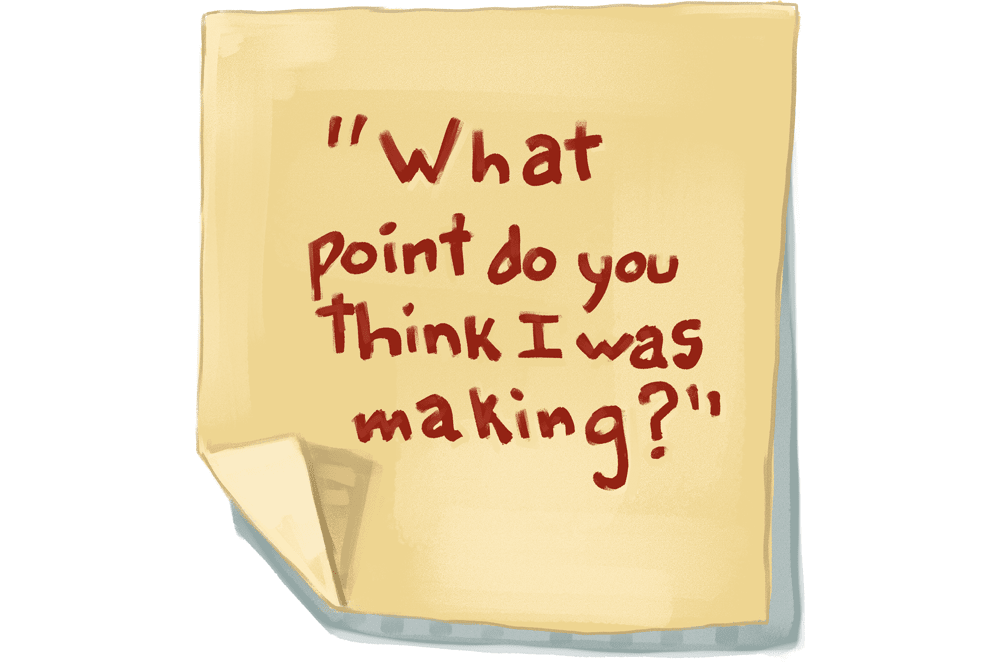
- “What point do you think I was making?”
- “What did I do that made that point clear and memorable?”
- “Where did I lose your attention?”
This guidance enables them to assess your most important goals as a presenter.
-
Test Your Setup
Last-minute surprises are never welcome. Prepare a checklist of logistical details to review in the days and hours before your presentation, including:
- The use of microphones, podiums, and confidence monitors (a screen at the foot of the stage that allows speakers to see their slides or notes)
- Who will introduce you, and what materials they’ll rely on for those remarks
- Objects in the room that might obstruct your view of the audience
- The compatibility and functionality of your devices
- Where to put your notes, laptop, materials, water, and/or clicker
-
Manage Your Nerves
Ultimately, your public speaking anxiety isn’t a fear of speaking. It’s a fear of messing up in public. The good news is that there’s an antidote: confidence. But how do you build it?
First, prep your body by giving it adequate sleep, eating well, hydrating, and limiting big meals and carbonated drinks.
Second, know your point so well that you can state it in under 10 words (If you don’t have a point, you SHOULD be nervous.)
Third, prep yourself with mini pep talks, like:
- “I got this!” A 2019 study found that students who recited a positive affirmation aloud immediately before giving a presentation had lower anxiety than those who didn’t.
- “I’m excited. I’m excited. I’m excited.” Psychological research shows that reframing anxiety as excitement is as easy as telling yourself, “I’m excited. I’m excited. I’m excited” before you speak. Your brain will follow your lead, transforming your nervous energy into enthusiasm. While audiences sympathize with nervous speakers, they respond to enthusiastic ones.
- “I’m here to present—not perform or impress.” You’re actually not nervous about public speaking; you’re nervous about making a bad impression and embarrassing yourself.
Shifting your mindset from performance to presentation can reduce your anxiety by focusing on doing a job rather than protecting a reputation.
- “Make them know what I know.” This phrase reinforces a service mindset and turns it into a compact to-do: “Make them know what you know.” That’s the goal. Nothing matters more.
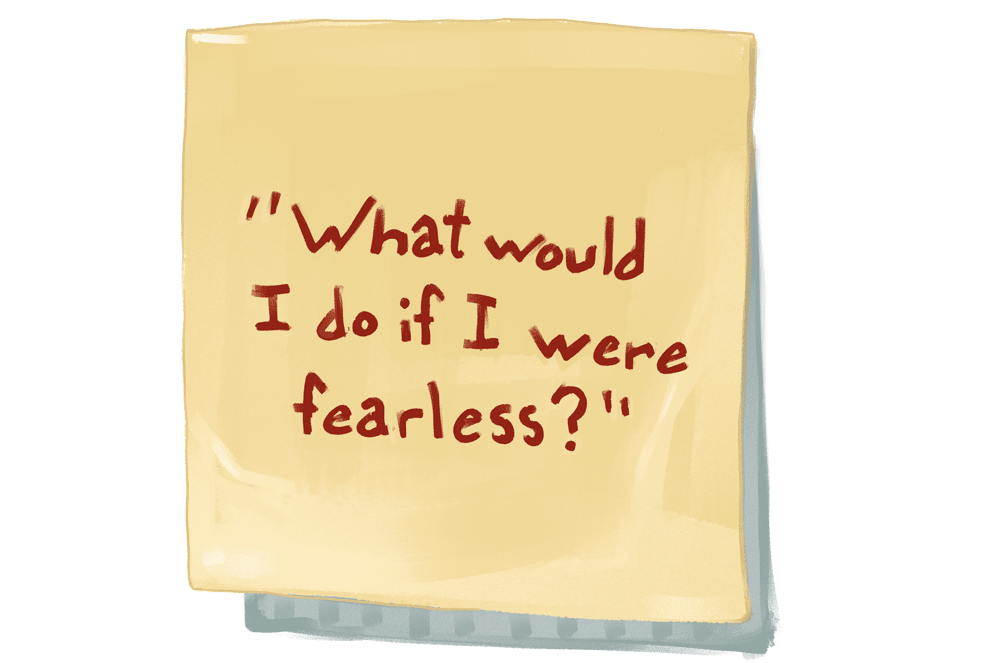
- “What would I do if I were fearless?” The advice to “visualize success” has never worked for me, but asking yourself a more specific question—what would I do if I were fearless?—can reframe the task of public speaking as less nerve-wracking and more doable.
What you do in the minutes, hours, days, and weeks before you speak matters.
PREPARE now so you don’t have to REPAIR later. What you do in the minutes, hours, days, and weeks before you speak matters—and these tips will help you land powerful points from your first word to your last.

Share this article
Joel Schwartzberg is a presentation coach, executive communication specialist, and author of The Language of Leadership: How to Engage and Inspire Your Team and Get to the Point! Simplify, Sharpen, and Sell Your Message. Follow him on
 Previous Article
Related Articles

Professional Development
Tips for Powerful Workplace Presentations

Presentation Skills
How to Rock Your Presentation

Presentation Skills