
 Previous

We live in a world captivated by progress—faster technology, bigger goals, endless achievement. Yet the most profound form of progress is not always external but internal. Personal growth seldom occurs in comfort; it begins the moment we step into uncertainty—when we forget our lines in a speech, start a new life in a different country, or confront something painful we have long avoided.
Humans are wired for growth from the moment we enter the world. Despite being born with exceptional hardware—a remarkably capable brain—we arrive with minimal software. Neuroplasticity—the brain’s ability to grow and adapt—and resilience develop only when we purposefully seek opportunities to stretch ourselves across different areas of life. If we want a stronger brain, we must pursue personal growth with intention.
The Stoic philosophers were perhaps the earliest advocates of this
idea—a view echoed by modern philosopher William B. Irvine in his book The Stoic Challenge. Irvine argues that adversity is not an obstacle but an invitation to grow stronger. Each time we tackle something new—from public speaking to learning a language—the brain strengthens its neural networks, turning effort into adaptability.
Here’s how three people focused on developing their growth and how you can begin your own personal growth journey.
The Power of Purpose
Angie Palmer, DTM, founding President of Earthlings 91´«ý Club and District 89’s 2021–2022 Toastmaster of the Year, began her personal growth journey at just 17. When she was told she could not be promoted within a Japanese hotel company because she did not speak Japanese and because she was a woman, she refused to accept those limits.
Palmer moved to Japan, learned the language, and immersed herself in a wide range of roles to expand her experience. Those actions changed her life. These early experiences built Palmer’s resilience, which helped her transition from bustling Hong Kong—a city of almost 8 million
people—to a small town in Central America of just 30,000. During the COVID pandemic, Palmer founded Earthlings 91´«ý, an online club connecting members across borders.
“Growth requires accountability and sacrifice,” she says. “It’s not about accumulating wealth, but experiences, it’s a process, not an outcome.”
As Palmer’s story illustrates, personal growth frequently begins with courage—often in defiance of what others tell us we cannot do.
Curiosity as a Compass
Well-being researcher and professor Aaron Jarden believes curiosity is one of the most powerful foundations for growth—a concept echoed by psychologist Todd Kashdan, Ph.D. In his book Curious?, Kashdan calls curiosity “the engine of growth and self-understanding.”
Jarden and his family treat curiosity as a ritual. Each year, during an annual camping trip in New Zealand, they hold a major check-in, asking questions like: Are we on the right path? Are we being challenged, or are we stuck in a rut? Are we one year stronger?
Jarden’s family ritual demonstrates that curiosity—not perfection—may be the antidote to stagnation. When we remain curious, we approach life as learners, not critics. It transforms uncertainty from a threat into a teacher.
Jarden also recognizes that growth is not always safe or easy. It requires energy, pacing, and support. “If you can’t afford to push too far, that’s okay,” he says. “Growth must fit your context. Keep things simple and realistic—that’s what sustains it.”
The Courage to Rebuild
For Olya Amelina, a health and performance coach in Germany, growth was not optional. Before burnout and depression struck, Amelina worked hard as a business development director in the hotel technology industry. Running on “ambition and coffee,” she eventually began to feel empty. Persistent neck pain set in, and she described her world as having turned “gray.”
Her doctor suggested antidepressants, but Amelina wanted more than symptom relief; she wanted understanding. She began researching what the body needs to thrive and slowly realized how unbalanced she had become in the male-dominated, performance-driven corporate world.
Determined to heal, she traveled to Istanbul, Turkey, to study health coaching and immersed herself in new experiences that encouraged self-trust. “You have to learn about yourself as much as you learn about another person,” she says. “Pause and look at yourself exactly as you would someone you care about.”
She even began “dating herself,” committing to her own well-being as deeply as she did to others. Burnout, though painful, became her turning point. “Burnout triggered a beautiful development in me,” she says. “It helped me learn about myself and take risks.”

Amelina now helps others restore balance through structure and
routine—eating and sleeping well, checking in with others, preparing rather than overworking. “Don’t strive for perfect,” she says. “Strive for better. Growth is a process of learning what works, what doesn’t, and why.”
Balancing Personal Growth
In New Zealand, we strive to shape our education and health systems around “Te Whare Tapa Wha,” a Māori model of well-being developed by Sir Mason Durie. The model envisions a house where each wall represents a side of well-being: mental and emotional, physical, family and social, and spiritual. This model supports personal growth because each type plays a key role in developing different skills and boosting your well-being.
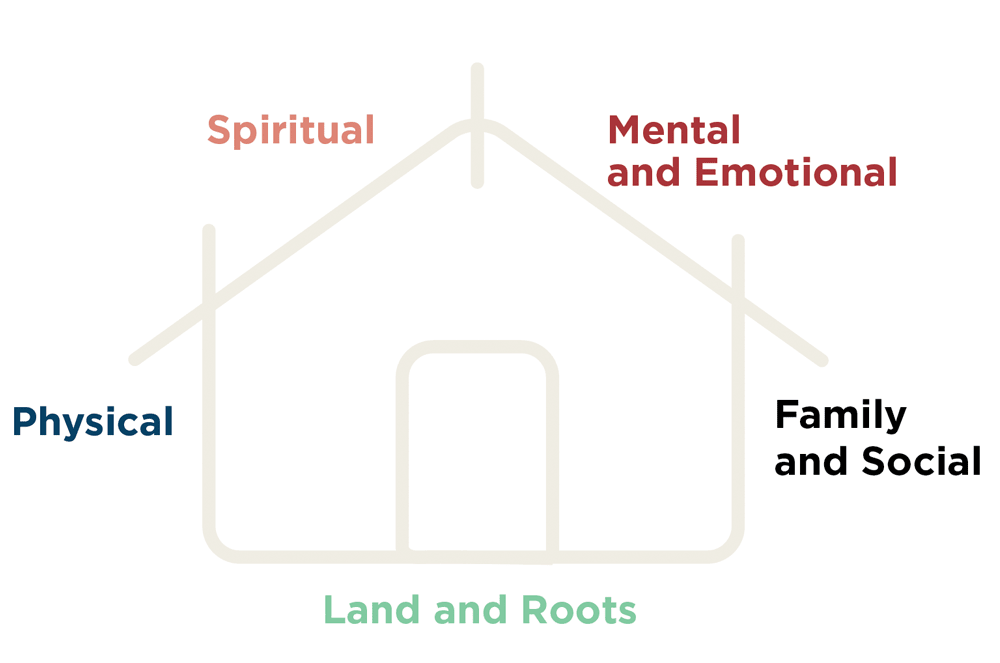 Depiction of Te Whare Tapa Wha, a Māori well-being model that represents the four dimensions of well-being (physical, mental/emotional, family and social, spiritual) and the importance of connection with the land.
- Mental growth: The process of learning new facts and skills.
- Social growth: The art of remaining connected to the people who matter, even amid differences and conflict.
- Emotional growth: Learning to notice, name, and tolerate feelings so they inform rather than hijack our choices.
- Spiritual growth: The process of clarifying what is worthy of our commitment, whether grounded in faith, philosophy, or a sense of purpose.
- Physical growth: This process focuses on the whole system. Sleep, movement, breath, and nourishment regulate the nervous system so that your mind, relationships, values, and feelings have a stable place to land.
Personal growth isn’t a checklist so much as an ecology. You can focus on one domain, but any real change tends to ripple through the others. For example, I experienced the ecology of growth firsthand during menopause. I realized how much confidence I had lost. My changing body felt like a new house—one that required different care. I had never set foot in a gym; I had always preferred the outdoors. Yet at 52, I discovered my body needed new forms of movement. My personal trainer encouraged me to try things I never imagined possible—including lifting about 441 pounds (200 kilograms) with my legs.
That physical strength rippled through every part of my life. I became more confident in my clinical work, less fearful of injury, and more adventurous again. Strengthening my body strengthened my spirit and mental health. It sharpened my attention, lowered my anxiety, and lifted my mood so my problems felt less catastrophic.
Practices like mindfulness, therapy, journaling, volunteering, or strength training rarely work in isolation. Each one engages multiple systems at once, gradually retuning how we feel, relate, make meaning, and live in our bodies.
The Inner Work of Growth
For many, the path to growth is complicated by early responsibilities that shaped who we are, including our strengths and our struggles.
If you grew up as “the responsible one”—the fixer, caregiver, emotional anchor—you likely developed extraordinary qualities: leadership, resilience, and social intuition. But those strengths may have come at a cost. You may prioritize others’ needs above your own or see asking for help as a weakness. You might be hyper-independent, perfectionistic, or a people-pleaser—patterns that once kept you safe but now may limit your potential. Luckily, self-leadership can help you overcome this challenge.
Richard Schwartz, Ph.D., founded the Internal Family Systems (IFS) psychotherapy model that views people’s minds as a system of parts. At our best, these inner parts operate under calm leadership—what IFS calls the “Self.” Self-leadership allows you to step back, notice what’s driving you, and choose a response that aligns with your values. You learn to recognize which “parts” of your mind are loud (the inner critic, the fixer, the avoider), how they’re affecting your behavior, and what each part is trying to protect you from.
“Growth is a process of learning what works, what doesn’t, and why.”
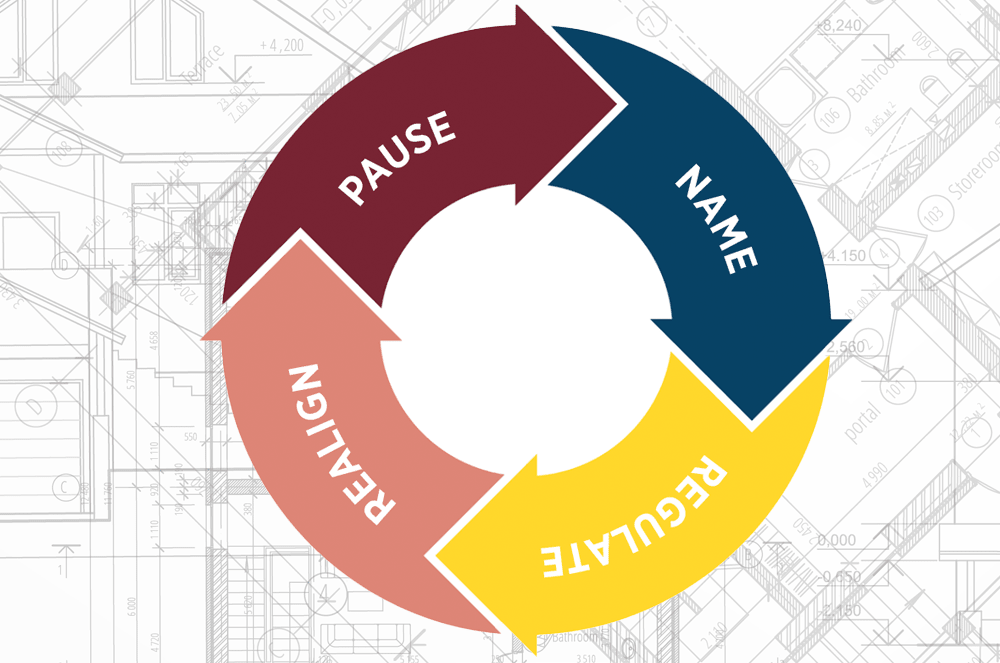
—Olya AmelinaOnce you identify this, there are four steps you can take to rebalance yourself: Pause (create space between impulse and action), name (identify your dominant thoughts or feelings and what could be causing them), regulate (breathe, walk, stretch), and realign (choose the next step that is consistent with your values). When you do this consistently, growth in one domain cascades into the others—clearer thinking, steadier emotions, better relationships, renewed meaning, and healthier habits.
Personal growth is rarely about willpower alone. After returning from Istanbul, Amelina began teaching others practical skills to pursue their goals. In the process, she discovered her creativity, something that corporate life had muted. She founded a studio with the belief that creativity can repair what stress fractures. Today she guides women through a reflective practice in which they photograph themselves in front of a mirror. “The camera is behind the mirror,” she says. “Women can truly see themselves from different perspectives.” The result is clearer self-perception, less distortion from social media and others’ expectations, and a gentle rebalancing across the five domains of growth.
The Strength of Connection
As Palmer and Amelina both discovered, growth can also be frightening. It demands vulnerability and a willingness to lose control. We risk mistakes, failures, and even embarrassment. That’s why we need support and accountability throughout the process.
Social connection, mentoring, and healthy relationships are essential resources for growth. As a trauma psychologist, I’ve learned that social support is one of the most stabilizing forces in any growth journey. We are built to take setbacks and adapt, but we rarely do it well alone.
Research confirms this. In a , participants standing beside a friend perceived a hill as less steep than those standing alone. Social connection doesn’t just make us feel better; it changes how we see challenge. When we feel supported, life’s hills literally look smaller.
Leading Ourselves Forward
Growth is a deeply personal experience. It is rarely linear. It bends, pauses, and sometimes doubles back.
For Jarden, the next step might be ballroom dancing—a playful extension of the curiosity he’s cultivated for himself and his family. For Palmer, after decades of outward achievement, the challenge now is inward. “Less can be more,” she says. Through risk and mistakes, she has learned humility and the importance of solitude. “Time alone,” she reflects, “is the next stage of my personal growth journey.”
For Amelina, growth continues through creativity in her studio, which helps more and more women rediscover who they are and see themselves anew. And for me, writing this article has reminded me to invest more time in my own family domain—cooking, playing, and reconnecting with the simple joy of presence.
Ultimately, personal growth is prosocial because it becomes a way of giving back. As Palmer puts it, “True growth doesn’t begin with achievement—it begins with humility.” In many Eastern philosophies, growth is not an individual conquest but a relational duty—first to oneself, then to family, community, and country.
We are not just passengers in our lives; we are leaders of our internal systems. When we learn to guide ourselves with calm, curiosity, and compassion, we do not just grow—we evolve into the kind of people who make growth possible for others.

Share this article
Kristen Hamling, PhD is a registered psychologist in New Zealand who specializes in trauma, resilience, and well-being. With over 25 years of clinical experience, she integrates psychological science with storytelling to help people and organizations grow through challenge.
 Previous Article
Related Articles

Professional Development
Advance Your Career Through Self-Leadership

Personal Growth