 Previous
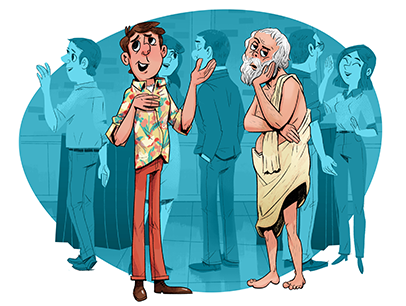
 Illustration by Bart Browne
If you are a manager, your job will be different after the pandemic than it was before. If you are a manager who, during the pandemic, accidentally turned on the Zoom filter and addressed your team while appearing as a potato, your job will be very different鈥攁s in working for another company. Once your team has seen you as a potato, they will always see you as a potato, and people don鈥檛 work for potatoes. They do work for peanuts, but that鈥檚 another story. No, best to seek employment elsewhere. Finely honed as your management skills may be, you will never fully regain the respect of colleagues who keep wondering if you should be fried, mashed, or scalloped.
How will your job in management be different? Nobody knows. I realize that is less than reassuring, but there are no business courses entitled Managing People Who Have Just Survived the Worst Public Health Crisis in 100 Years and Who, After Spending a Year and a Half Working from Home, Have Discovered They Really Don鈥檛 Need To Be Managed. And yet that is precisely what you鈥檙e up against.
The good news is that you鈥檙e really not a manager anymore! Management per se no longer applies. Management is responsible for operational efficiency, organization, best practices, and deciding who gets an office with a window. You, on the other hand, are now dealing with workers who have organized themselves efficiently, developed their own best practices, and are looking out their home windows with views far more attractive than the FLY DELTA billboard across the street from the office.
If we don鈥檛 need managers, what do we need? Leaders! In a transformational time, businesses can鈥檛 maintain the status quo. They need you to create a new one. In other words, you are no longer the conductor. You are now the composer. Don鈥檛 let it frighten you. Most businesses have always been 鈥渙ver-managed and under-led.鈥� This is your opportunity to grab the banner, blaze the trail, lead the troops into uncharted territory, and be remembered as Richard the Lionheart instead of Larry the Let鈥檚 Have a Meeting.
This is your opportunity to grab the banner, blaze the trail, and lead the troops into uncharted territory.
As you inspire your charges, do not use phrases like 鈥渢he new normal鈥� or 鈥渆mbrace change.鈥� If something is new it isn鈥檛 normal, and workers have as much enthusiasm for embracing change as they do for hugging a porcupine. Change brings uncertainty, loss of control, unpredictability, worry. It causes rashes, gastrointestinal distress, nail biting, facial tics, and, in severe cases, regression to the fetal position. Instead of embracing change, just say you鈥檙e all going to 鈥渢ry something a little different.鈥�
According to an article in Forbes magazine last year by Dana Brownlee, candor without ambiguity is a good place to start. After so much conflicting information during the pandemic, folks want the plain, simple truth, which for many businesses is a novel concept in itself. No more company line, no more reports by committee. Just you 鈥� and them 鈥� and the truth. Hard, I know, but that鈥檚 why you get the reserved parking space.
Show empathy. Your coworkers have been through a trying time. They鈥檙e fragile. One tone-deaf remark could be devastating. Saying 鈥淥kay, folks, vacation鈥檚 over. Let鈥檚 get back to work鈥� is not funny. If you think it is, get professional help. I don鈥檛 know what a good life coach is charging these days but it鈥檚 worth it. Correlative to this is active listening鈥攊.e., listening to understand rather than listening to respond. 鈥淟istening鈥� can no longer mean letting the other person talk while you think of all the reasons he or she is wrong. Now you must be prepared to say, 鈥淵ou鈥檙e right.鈥� For those who have never said it before, it might take some practice. First say 鈥測ou鈥檙e.鈥� Then say 鈥渞ight.鈥� Then put them together.
Flexibility is important too. Change is everywhere. Prepare to adapt. Cruising the halls for gossip may have to go.
Finally, be humble. As a manager you鈥檝e always been the person with the answers, even when you didn鈥檛 have any. Now you must learn to say, 鈥淚 don鈥檛 know.鈥� (I feel your pain. It hurts just to write it.) However, if you add 鈥淏ut I鈥檒l find out,鈥� you鈥檒l be respected as a leader who isn鈥檛 afraid to reassure his followers, 鈥淚 have no idea where we鈥檙e going but I鈥檒l get us there.鈥� Not the inspiring words of a great visionary but it鈥檚 better than being thought of as a potato.
Share this article
John Cadley is a former advertising copywriter, freelance writer, and musician living in Fayetteville, New York. Learn more at .
 Previous Article